
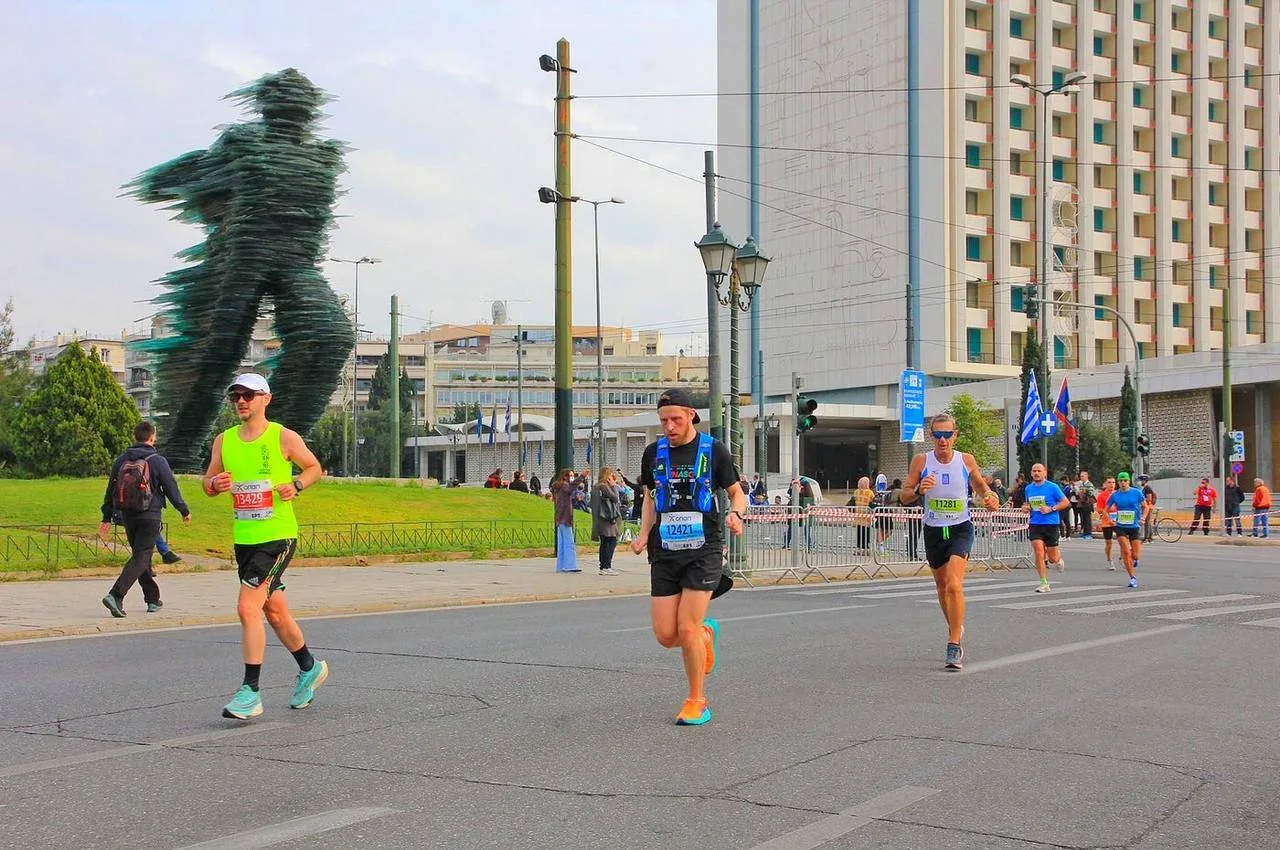
Marathon and Athens memorials 8-h tour
Duration 8 hours
Private Tour & Shore Excursion
Price from €110
** Price is per person for a group of 3 passengers. Prices vary greatly depending on the number of people and type of vehicle. The final price will be calculated online using our booking engine.
The most famous private tour in Athens and Marathon around the world. The two places that marked the world’s history. The birthplace of the Marathon run.
Athens is the capital and largest city of Greece, dominates the Attica periphery and it is one of the world’s oldest cities, as its recorded history spans around 3,400 years, and Marathon 2,500.
Highlights of Marathon and Athens memorials 8-h tour
- Eight-hour private guided tour in Athens & Marathon by luxurious vehicle
- English-speaking tour driver-guide
- Visit the two places that marked the history of the world
- Visit the Acropolis, the Parthenon, and the Marathon memorial
- Enjoy a walk in the picturesque neighborhood of Plaka
- See the start point of the classic Marathon
ITINERARY DETAILS
DESCRIPTION
The capital of Greece is a cosmopolitan metropolis, modern Athens is central to economic, financial, industrial, political, and cultural life in Greece and it is rated as an alpha world city. Classical Athens was one of the most powerful city-states in the ancient world; a center for arts, learning and philosophy, home of Plato’s Academy, Aristotle’s Lyceum, and wisest of men Socrates. It is widely referred to as the cradle of Western civilization and the birthplace of democracy, largely due to the impact of its cultural and political achievements during the 4th and 5th centuries BC on the rest of the then-known European continent.
Enjoy this private tour in Athens, combining many of the city’s principal modern and classical sights. Your Athens tour includes an overview of the modern city and striking contrasts to the remains of its glorious past. See the Tomb of the Unknown Soldier in front of the Parliament House on Constitution Square, the Panathenaic Stadium (site of the first modern Olympic Games in 1896). Admire the Presidential Palace (ex Royal Palace), government buildings, and elegant homes.
Your Athens private chauffeur will then drive you along Panepistimiou Avenue and view the Catholic Cathedral, the “Neoclassical Trilogy,” (Academy, University, National Library), and Omonia Square. The private tour will take you to the Temple of Olympian Zeus and Adrian’s arch, the Acropolis with its many monuments including the Mars Hill, the Parthenon, the Propylaea, the Temple of Athena Nike, and the Erechtheion with its Porch of Maidens.
ITINERARY (break-down)
Start: Pick up from your hotel in Athens, address in Athens, or cruise ship pier at Piraeus port. Pass by several areas on the way to the Acropolis depending on where you’ll start!
- Duration: 20 Minutes average

Stop At The Acropolis
One of the best Greece tours starts with the hill of Acropolis of Athens which will make your day. On the historical hill at the Acropolis, you will have the chance to see the monumental gateway (Propylaea); The Propylaea is the monumental entrances to the sacred area dedicated to Athena, the patron goddess of the city. Built by the architect Mnesicles with Pentelic marble, their design was avant-garde.
To the south-west of the Propylaea, on a rampart protecting the main entrance to the Acropolis is the Ionian temple of Apteros Nike, which is recently being restored dedicated to the goddess Athena Nike, the Erechtheion Temple of Poseidon & Athina and of course the famous Parthenon, the main temple dedicated to the virgin goddess Athena. Also, you will have the chance to admire from the top of the Acropolis the Theater of Dionysus and the Odeon of Herodes Atticus.
The theater of Dionysus Eleuthereus is a major theater in Athens, considered to be the world’s first theater, built at the foot of the Athenian Acropolis. The Odeon of Herodes Atticus is a stone Roman theater structure located on the southwest slope of the Acropolis of Athens, Greece. The building was completed in 161 AD and then renovated in 1950.
- Duration: 80 Minutes
- Admission Ticket Not Included
Pass By: After the Acropolis, we will head towards the Melina’s Mercury statue, the famous Herodou Attikou street that leads you to the Acropolis museum and the Acropolis, the Temple of Olympian Zeus and Hadrians Arch or else the Athens Gate, The Zappeion Megaron is a part of the national heritage of Greek civilization and it is a donation from Zappas to the state!
- Duration: 15 Minutes
Stop At Panathenaic Stadium
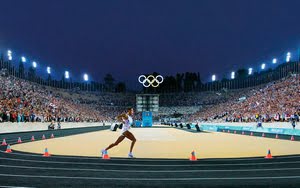
We will stop for pictures at the Panathenaic Stadium where the first modern Olympic Games were held in 1896. The Panathenaic (Kalimarmaro) Stadium is one of the main historic attractions of Athens and the only stadium in the world built entirely of marble. A stadium was built on the site of a simple racecourse by the Athenian statesman Lykourgos (Lycurgus) c. 330 BC, primarily for the Panathenaic Games. The stadium hosted the opening and closing ceremonies of the first modern Olympic games in 1896.
It was used once again as an Olympic venue in 2004. Today is the finishing point for the annual Athens Classic Marathon and it is the last venue in Greece from where the Olympic flame handover ceremony to the host nation takes place. Take some pictures and we’ll continue to our net stop.
- Duration: 10 Minutes
- Admission Ticket Not Included
Pass By: The statue of Truman (the USA president), the Runner statue made all of it of glass, the Megaron the music hall and conversion center of Athens, a tour through Kolonaki the high end of Athens center.
- Duration: 15 Minutes
Stop At Mount Lycabettus,
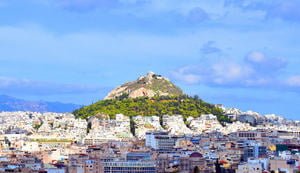
also known as Lycabettus, Lykabettos or Lykavittos, is a Cretaceous limestone hill in Athens, Greece at 277 meters (909 feet) above sea level, a bit less than twice as high as the Acropolis. . Pine trees cover its base, and at its two peaks are the 19th century Chapel of St. George, a theatre, a cafeteria, and a restaurant. The tallest of Athens’ seven hills rises abruptly out of the middle of the city and like the Acropolis, which it towers above, it is visible from almost everywhere.
There is no way you can miss Mount Lycabettus. It almost begs to be climbed and sooner or later, if you have a spare afternoon in Athens and you are even moderately fit, you are going to be tempted to have a go. The main reason people climb Lycabettus is to enjoy the astonishing 360° views from Athens’ highest and most central point.
- Duration: 15 Minutes
Pass By: After Lycabettus will drive again through Kolonaki and the historical site of the city passing by the war museum, the Byzantine museum, the museum of ancient archaeological Cyclades civilization, the national garden (ex-royal garden), the Plateia Syntagmatos Syntagma Square, the central square of Athens. The square is named after the Constitution that Otto, the first King of Greece, was obliged to grant after a popular and military uprising on 3 September 1843.
- Duration: 20 Minutes
Stop At Hellenic Parliament
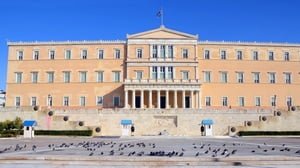
The Hellenic Parliament, in Greek known as Voulí ton Ellínon, is the parliament of Greece, located in the Old Royal Palace, overlooking Syntagma Square in Athens. The Parliament is the supreme democratic institution that represents the citizens through an elected body of Members of Parliament. See the Tomb of the Unknown Soldier. Watch the changing of the guard (Euzones) in front of the ex-royal palace, today the Parliament House of Greece, above the central square of Athens.
- Duration: 15 Minutes
- Admission Ticket Free
Pass By: Numismatic Museum of Athens, Attica shopping mall, the Catholic cathedral of Athens, The Academy of Athens. The Building constitutes one of three parts in an “architectural trilogy”. It was founded with the Constitutional Decree of March 18th, 1926, as an Academy of Sciences, Humanities and Fine Arts, The Kapodistrian University of Athens, The National Library of Greece was built at the end of the nineteenth century, as the last of the Architectural of Athens, a group of three neoclassical buildings which also includes the Academy and the University.
The building was designed by Theophil Hansen, Council of State, Kolokotronis statue (Theodoros Kolokotronis; The ultimate Symbol of the Greek Revolution of 1821 against the Ottomans!), The National Historical Museum (old parliament house of Athens), the constitutions square, Ermou str. ( the Athens central shopping street) and Plaka the old part of Athens with it picturesque neighborhoods and pedestrian streets full of cafes, restaurants and all kind of shops!
- Duration: 30 Minutes
Stop For Lunch
Time for lunch at a traditional Greek restaurant to try delicious home-cooked food, like the Greeks cook at home! (not included).
- Duration: 60 minutes
Pass by: After lunch, we’ll drive through Athens and its suburbs passing by the runner, the statue made of glass, the Megaron (the modern music hall of Athens), by Cholargos, Agia Paraskevi, Gerakas, Palini, Mati, Nea Makri and finally reach Marathon.
- Duration: 50 Minutes
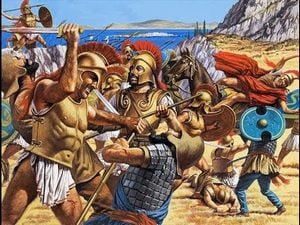
Marathon, History
The battle of Marathon was a pivotal moment in the history of Greece. The Battle of Marathon (Greek: Μάχη τοῡ Μαραθῶνος, Machē tou Marathōnos) during the Greco-Persian Wars took place in 490 BC and was the culmination of the first attempt by the Achaemenid Empire of Persia, under King Darius I, to subjugate Greece. On these grounds, the outnumbered Athenians defeated the first invasion by the Persian army led by King Darius in 490 BCE and set the stage for a century of splendor and Greek innovation in politics, philosophy, art, theater, and culture. Marathon, the place where every year the Marathon run starts.
It is a long-distance foot race with an official distance of 42,195 kilometers (26 miles 385 yards) that is usually run as a road race. The event is named after the fabled run of the Greek soldier Pheidippides, a messenger from the Battle of Marathon to Athens. The historical accuracy of this legend is in doubt, contradicted by accounts given by Herodotus, in particular.
The marathon was one of the original modern Olympic events in 1896, though the distance did not become standardized until 1921. More than 800 marathons are contested throughout the world each year, with the vast majority of competitors being recreational athletes. Larger marathons can have tens of thousands of participants.
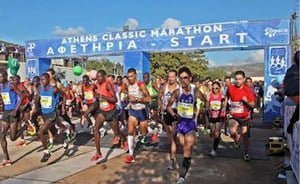
Stop At Marathon
1. The Middle-Helladic Tumuli are protected in a large building outside the Marathon Museum. 2. The Tumulus of the Athenians shelters the bodies of some two-hundred Athenians who fell in the battle of Marathon. 3. The trophy of Marathon. This replica of the original trophy is located a little to the north of the Athenian Tumulus. It was erected by the Athenians to commemorate their win in the battle of Marathon.4. The three-dimensional plan of the Marathon is found in the vicinity of the Tumulus of the Athenians. It conveys a good general idea of the topography and marks the important archaeological spots in the area.
5. The Marathon Run Museum. The permanent exhibition of the “Olympic Marathon” presents for the first time in public the history of the Olympic Marathons from 1896 to 2000. Over 4000 exhibits that record the history of the Marathon race from 1896 until today. A unique historical sporting collection that could not be found elsewhere than in the birthplace of the Marathon road race. 6. Archaeological Museum of Marathon. The museum mainly houses findings originating from the Battle of Marathon and from the Egyptian temple
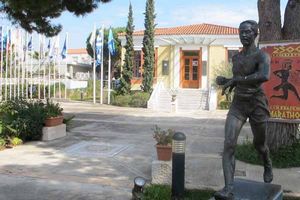
built nearby.
7. The start point of the Marathon run
The start point of the 42 km race-course is the Marathon Start Venue in the city of Marathónas, and its finishing point the Panathenaic Stadium; over 25 thousand Greek and foreign runners, retracing the steps of Pheidippides himself, will follow the classic marathon route invoking the memory of a great victory that determined Greek and world destiny alike.
A victory that has come to represent over the centuries a powerful symbol of uneven battle; the thirst for freedom against despotism; justice against injustice; civilization and democracy against barbarianism; the battle of spiritual values against materialism. Greeks have a sacred duty to fulfill: to safeguard the values and ideals that were born in the Marathon battlefield -ideals that humanity needs now more than ever- and to spread the message of hope all over the world.
- Duration: 100 Minutes
- Admission Ticket: Not Included
Pass By: After the end of our visit, we’ll take the same way back to Athens.
- Duration: 50 Minutes
DEPARTURE | RETURN
- Transfer offerd; Travelers pickup/drop off is offered.
- Pick up from; We will pick you up from any hotel or apartment in Athens center and Piraeus cruise port at the cruise ship pier!
- Info needed When booking make sure to include the address of your accommodation, or the name of the cruise line and the cruise ship!
- Pick up time; We propose to pick you up at 8 am in order to avoid traffic and crowed at the Acropolis.
- Drop off; We will drop you off at the same place we have picked you up or at any hotel in Athens center or cruise ship pier!
INCLUDED | EXCLUDED
What is Included
- Professional driver with good knowledge of history and culture in Greece
- Transport by air-conditioned vehicle appropriate for the size of your group
- Accommodation is based according to availability (for multiple day tours only)
- Flexible pick up time on request (proposed 08:00AM)
- Free Pick-up from and return to your hotel
- Free Pick-up & drop off from Piraeus cruise port
- Athens Airport transfers or pickup locations outside Athens: arranged on request with surcharge
- First class transport: By Mercedes E-Class or similar; Mercedes minivan or Mercedes minibus according to the size of your party. All new models come with full leather and A/C.
- Road tolls and local taxes
- Our terminal: Leof. Andrea Siggrou 37, 117 43 Athina, Greece.
- Official licensed tour guide for guiding in archeological sites. Available on request with surcharge
- The private tour is 100% exclusive for your party
What is Excluded
- Entrance fees to the archaeological sites and museum
- Wine tasting fee (wine tours)
- Athens Airport transfer: arranged on request with a surcharge
- Gratuities (optional)
- Food and beverage
- Your private chauffeur/guide will discuss a program best suited to your interest and mobile abilities. Option for a professional tour guide with a state license at an extra cost.
IMPORTANT NOTES
Tour Type
- Private tour - Shore Excursion
- Activity level: Moderate
- Departures: Daily
Restrictions
- Due to the high complexity and uncertainty of contemporary transportation, as well as unexpected situations, the planned itinerary can change at any moment and our choices may be affected by any social, economic or environmental phenomena!
Guaranteed Departures
- Best Greece Tours is proud to be the first in the industry to offer Guaranteed Departures . A guaranteed departure means; There is no minimum number of bookings required on a trip to run and that the tour will definitely operate on the day it is scheduled and will not be cancelled. All guaranteed departures will run except in the event of a natural disaster or other similarly disruptive event that is beyond our control. Our current collection of tours can take you to exciting places in Athens and around the world.
How will we use the information you wll give us about you!
- Passenger Detail; We need basic contact details so we can send appropriate booking information to you as well as make sure the supplier can contact you should they need to.
- Flight Details; We will need to know your exact travel details so they can track flight time as well as make sure they get you to and from your destination with no delay.
- Accommodation Details; We need to know your pick-up and drop-off address to ensure the right price and that we know exactly where to meet you or take you.
- Payment Details; We will pass your payment details to our secure payment provider, but we do not see or store any of these details on our website payment details.
Importantant information!
- Dress: religious and memorial sites: shoulders and knee must be covered.
- Terms & Conditions, F.A.Q , Privacy policy & Cookies
- Confirmation will be received at time of booking
- A voucher will be emailed to you with our contact numbers and all necessary information for your tour.
- This is your ticket and proof of purchase. On the day of tour please present a paper voucher in order to redeem your tour/activity.
- Itinerary (break-down)Due to the high complexity and uncertainty of contemporary transportation, as well as unexpected situations, the planned itinerary can change at any moment and our choices may be affected by any social, economic or environmental phenomena!
Persons with Disabilities
- Due to uneven surfaces, certain sites are not recommended for persons with walking disabilities or using a wheelchair. Such sites are the Acropolis, the Temple of Poseidon at Sounion, Mycenae, Delphi and Meteora.
- In all cases, we recommend comfortable flat-solid walking shoes, sunglasses and sunscreen.
- For guests who are full-time wheelchair users a ramp vehicle will be needed. Guests may remain in their wheelchair or scooter for the duration of the excursion. Wheelchair or scooter dimensions are required in order to confirm the correct vehicle!
- Wheelchair or small scooter folding type only. (Please note that disabled passengers must be able to board the vehicle independently or with the assistance of those in their party.)
Opening hours & Admission fees
- Opening Hours: Summer April 1st to October 31st from 08:00 AM to 07:30 PM
- Winter: November 1st to March 31st from 08:30 AM to 03:00 PM
- Free admission fees: Children under 18 & Students from E.U.
- Reduced admission fees: Citizens of the E.U. aged over 65 & Students from countries outside the E.U.
Free admission days
- March 6: In memory of deceased Minister of Tourism & visionary Melina Mercouri
- June 5: Environment international day
- April 18 : International monuments day
- May 18: International museums day
- September 27: International tourism day
- The last weekend of September annually (European Heritage Days)
- National Holidays
- Sundays in the period between 1 November and 31 March
- The first Sunday of every month, except for July, August and September
- NOTE: If the first Sunday is a holiday then the second is the free admission day
Holidays in Greece
- January 1: closed
- January 6: 08:30 AM - 03:00 PM
- Shrove Monday: 08:30AM - 03:00 PM
- March 25: closed
- Good Friday: 12:00 PM - 03:00 PM
- Holy Saturday: 08:30 AM - 03:00 PM
- Easter Sunday: closed
- Easter Monday: 08:30 AM - 03:00 PM
- May 1: closed
- Holy Spirit Day: 08:30 AM - 03:00 PM
- 15 August 15: 08:30 AM - 03:00 PM
- October 28: 08:30 AM- 03:00 PM
- December 25 & 26: closed
CANCELLATION POLICY
- Sedans; Within 24 hrs of travel 100% fee will apply. Outside of 24 hrs a €2 per person cancellation charge will apply.
- Minivan; Within 36 hrs of travel 100% fee will apply. Outside of 36 hrs a €2 per person cancellation charge will apply.
- Minibus 10-20 seats; Within 96 hrs of travel 100% fee will apply. Outside of 96 hrs a €2 per person cancellation charge will apply.
- For all vehicles; No show mean, no refund